Source ethically
Verified DNA is sampled from healthy and responsibly kept cows by participating farmers. Welfare data travel with the NFC chip on the DNA capsule.
Homepage
Real beef, no slaughter.
A compact microwave-sized biocooker that grows tonight’s steak from verified cow DNA and nutrient cartridges. Load a DNA capsule, insert nutrient cartridges, press start. Your steak is ready for cooking within hours.
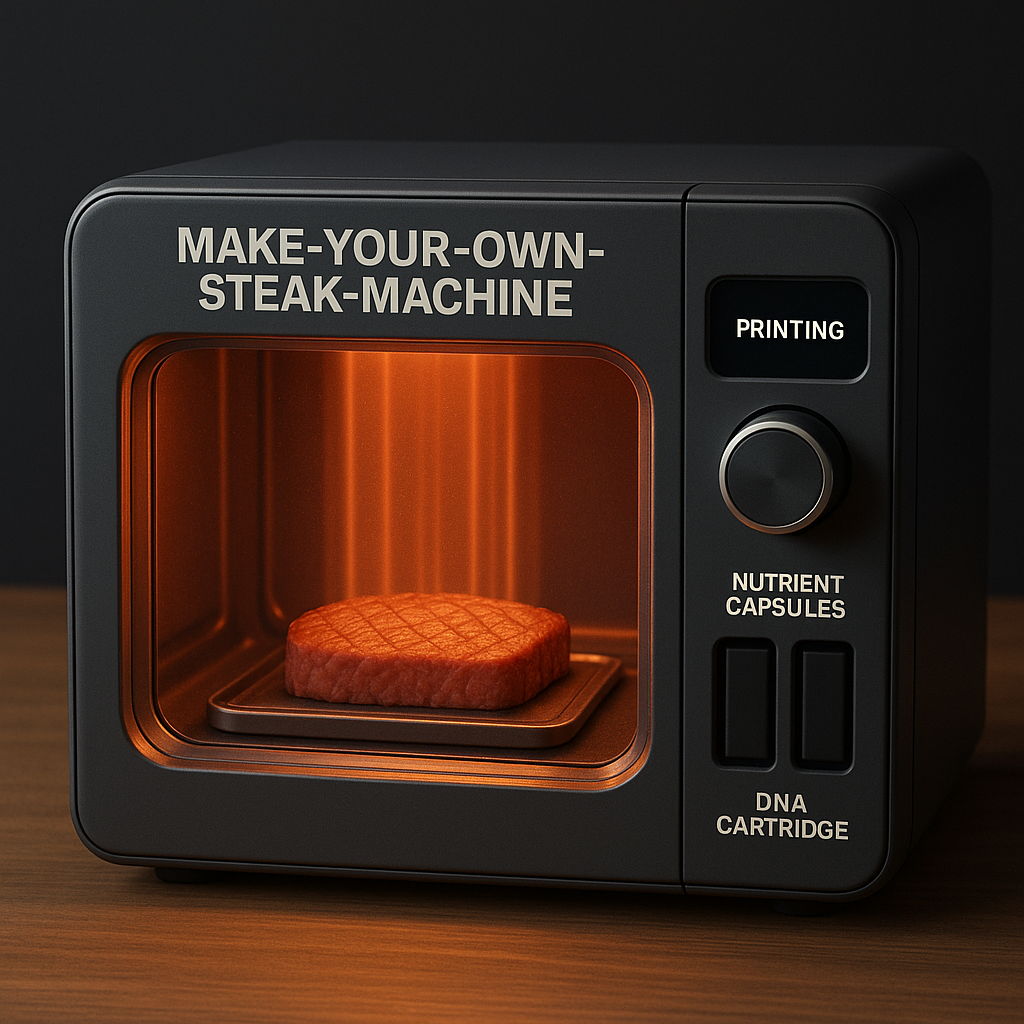
We work with certified partners to introduce this technology via controlled pilots. Make sure to always follow the proper hygiene steps and approved guidelines, as indicated on-screen. Regional food safety approvals apply.
Source ethically, load & verify, grow, prepare & enjoy.
Verified DNA is sampled from healthy and responsibly kept cows by participating farmers. Welfare data travel with the NFC chip on the DNA capsule.
Insert the DNA capsule and nutrient cartridges. The touchscreen reads NFC chips, verifies origin, and shows estimated grow time and CO₂ / water savings.
Inside the transparent chamber, muscle tissue forms layer by layer under sterile, controlled conditions.
Remove, rest, season, and cook your steak — real meat taste and texture, no slaughter.
Meat without compromise.
Traditional beef is a major source of water use and greenhouse gases. Growing meat directly from DNA removes slaughter, transport, and processing, cutting water use by ≈ 11 L per kilo and drastically lowering CO₂ emissions (source: National Advisory Committee on Microbiological Criteria for Food, 2018-2020).
The debate between animal-welfare and meat-lover camps is reframed: DNA is collected non-invasively from well-kept cows, eliminating slaughter guilt.
The tech decentralizes meat production. Farmers become DNA caretakers and machine operators; restaurants produce steaks in-house; consumers gain full transparency. Power shifts back to local producers, creating fresher and more resilient food systems.